December 23rd, 973
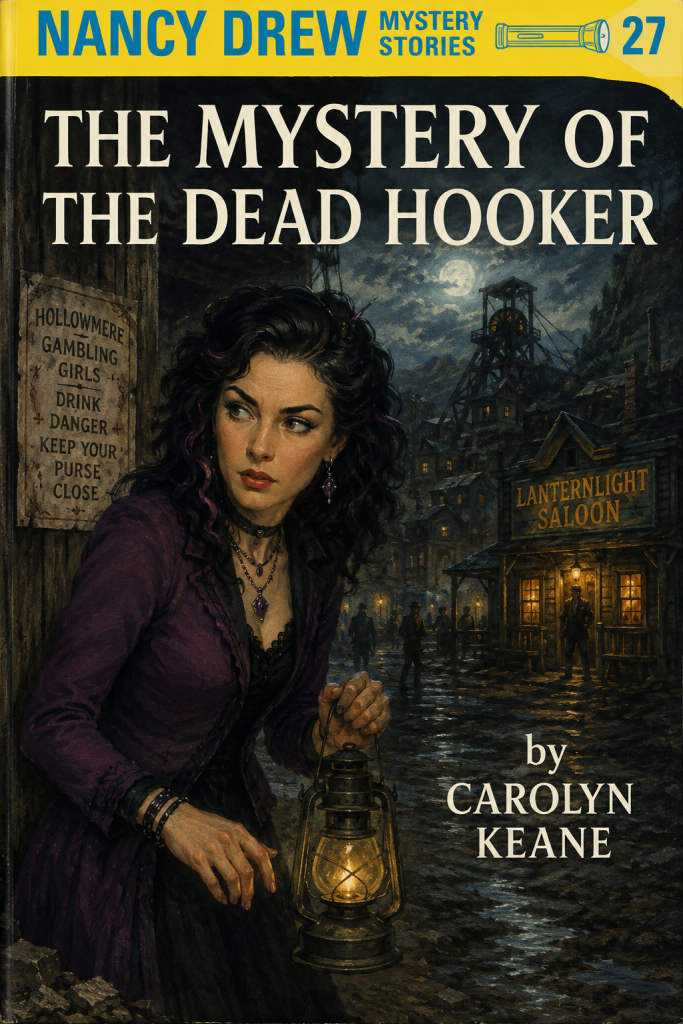
Settling In
In Old Hollowmere, the party took rooms at the Copper Kettle Inn and Alehouse, conveniently—or inconveniently, depending upon whether one wished to spend the evening sleeping or gambling—located directly beside the perpetually noisy Black Pick Gambling House.
Their possessions properly stowed, they descended for supper and quickly discovered that, in Hollowmere, gossip was served in portions at least as generous as the stew.
The inn staff confirmed that the official story regarding the new dig remained copper mining though, much like Phineas and Barin, no one in Hollowmere appeared remotely convinced by this explanation. The old mines had been exhausted generations ago. Everyone knew it. Yet the Crown had spent seven years,
- Expanding roads
- Fencing off hillsides
- Fortifying excavation zones
- And driving shafts deep into the mountains
with a level of urgency one normally associates with impending invasion or divine judgment.
The inn staff cheerfully supplied theories over supper.
Perhaps the Crown had found:
- An ancient Orcish god,
- A buried treasure vault,
- A portal,
- Or a dragon they hoped to enslave.
One laborer insisted, with considerable drunken conviction, that the Crown was “burying something, not digging it up.” No one laughed.
Grief and Sensitivity
The following morning, the party was introduced to Elswyth Harrow, a weary farmwoman whose expression suggested she had not slept properly in days.
Her daughter, Lysa Harrow, had vanished two weeks ago.
Lysa had worked at The Lanternlight Inn, in New Hollowmere as a courtesan and hostess. Elswyth admitted this with visible discomfort but also with the exhausted practicality of someone long past pretending that moral disapproval pays bills. The money Lysa earned had helped support the Harrow farm and, more importantly, helped care for her younger brother Bren Harrow, whose chronic illnesses and limited intellectual functioning made steady work impossible.
Now the money had stopped. Garric Harrow, already aging badly from years of labor, had begun driving himself harder in the fields to compensate.
“He’ll work himself into the grave,” Elswyth admitted quietly.
Cassyndra, moved by the story in precisely the way that only Cassyndra could be moved by anything, immediately adopted the investigative strategy of informing nearly every person the party subsequently encountered that they were “looking for a dead hooker.”
At one particularly unfortunate moment, the party openly discussed, in front of the visibly distressed Elswyth Harrow, the possibility that Lysa might currently be:
- Dead
- Undead
- Or interred within some sort of horrific subterranean body-processing facility
Elswyth reacted approximately as one might expect.
The Lanternlight
The party next visited The Lanternlight Inn, Hollowmere’s largest and busiest tavern.
The establishment possessed the unmistakable atmosphere of a frontier business functioning simultaneously as:
- Saloon
- Gambling hall
- Brothel
- Labor exchange
- And rumor market
The courtesans described the structure of their profession with surprising frankness. There was no madam, no guild oversight, and little formal organization. The tavern owner received payment for rooms and protection while disputes were usually handled internally among the women themselves.
More importantly, however, the party learned about Corin Vale.
Corin had been a Crown surveyor attached to the excavation project. Quiet. Educated. Socially awkward. According to the women at the Lanternlight, he and Lysa had started with a business arrangement but had gradually come to care for one another genuinely.
Corin treated her as an intellectual equal—something few others in Hollowmere ever had.
The two were often seen sitting side by side while he explained surveying, engineering, and excavation work to a fascinated Lysa.
Six weeks ago, however, he vanished.
Official explanations were inconsistent and vague. Reassignment. Transfer. Clerical error. Depending upon who was asked, all three had apparently occurred simultaneously.
Lysa had refused to let the matter rest. She began asking questions. She made inquiries among miners and surveyors, studied maps, and spent her off-hours quietly investigating old excavation zones.
She grew increasingly frightened in the weeks that followed.
Then, two weeks ago, she disappeared as well.
At first, people assumed she was ill or visiting family. Only gradually did the realization settle over the Lanternlight Inn that she was truly missing.
Among her remaining belongings were:
- Two otherwise unremarkable drinking cups she and Corin regularly used,
- And a hand-drawn map marked not with conventional cartographic symbols, but with obscure geometric notations clearly intended to conceal meaning from casual viewers.
The party immediately became interested.
Colonel Varnes
As they departed the Lanternlight, the party heard a murmur ripple through the crowd.
“Colonel Varnes.”
Turning, they observed a Crown officer moving through the street accompanied by a pair of aides. While the aides appeared normal enough, Colonel Varnes did not.
There was nothing overtly monstrous about him. No exposed bone. No glowing eyes. No theatrical aura of undeath. Yet something about him felt… adjacent to death in the way cold iron feels adjacent to violence.
His movements were slightly too controlled, his expression slightly too still, his skin slightly too pale, and his sensitivity to light slightly too much.
Wolfgang, recognizing an opportunity when he saw one, deliberately stumbled into the Colonel’s path in order to slow the procession long enough for the rest of the party to get a better look.
This maneuver succeeded admirably.
The Colonel regarded Wolfgang with the faint irritation of a man deciding whether a peasant is worth acknowledging.
He moved on before Cassyndra could ask whether he had “seen any dead hookers lately.”
A missed opportunity, perhaps.
Heka, Cassyndra’s owl familiar, shadowed the Colonel from above until reaching the Crown compound, where increasingly aggressive anti-familiar precautions forced a retreat.
The Crown, it seemed, took snooping seriously.
The Outnumbered Constabulary
The party next visited the Hollowmere constabulary where they met Tobin Rell, a painfully earnest young constable who had spent his entire life in Hollowmere and looked increasingly overwhelmed by the modern version of it.
Disappearances, he admitted, were becoming disturbingly common. Usually they were drifters, gamblers, laborers, or miners. Almost all of them went missing with only one body having been recovered – that one had been dismembered with the parts scattered throughout town. It seemed to have been related to a gambling dispute or an unpaid debt.
The others had simply vanished.
The constabulary had attempted investigations into both Lysa Harrow and Corin Vale but the Crown, had refused meaningful cooperation regarding Vale, leaving the three constables with little recourse beyond,
- Searching the town unsuccessfully for bodies
- Asking nervous questions with equal success
- And continuing to spend the vast majority of their time attempting to keep the town’s general criminal activity to a dull roar.
Later, the party met Mara Fenlow, the former wilderness ranger now serving as a constable. After examining Lysa’s strange map for only a few minutes, Mara succeeded in partially decoding it using her knowledge of the surrounding terrain.
The symbols did not indicate mines; rather they indicated trails, an old cave system outside the Crown’s official area of interest, and a hidden approach to that system through the hills.
The third constable, Aldren Pike, was the head of the constabulary and was off duty at the time. The others had nothing but praise for him.
Up until Hollowmere’s transformation, all that had been required was:
- Aldren’s part-time service,
- And a handful of farmers who could be trusted to appear with clubs whenever trouble arose.
Now, however, the old ways were overwhelmed.
Mara Fenlow had been obliged to move into town permanently to help manage the growing crime wave while Aldren had taken Tobin on as a full-time deputy.
Even between the three of them, however, they struggled to keep crime reduced to a tolerable level, much less investigate every disappearance properly.
Organized Goblins?
At the Adventurers’ Guild, the party met Bernard, the Guild representative in Hollowmere.
The heroes were startled to learn that, unlike most Adventurers’ Guild chapters, Hollowmere did not maintain a public job board.
“Around here,” Bernard shrugged, “people handle their own business however they see fit. And people who think they’ve found a hot lead on treasure in the hills tend to keep it to themselves.”
His primary role involved outfitting adventuring groups headed into those same hills. That business, while fundamentally unchanged, had increased substantially since the Crown arrived.
The only genuinely unusual development Bernard could point to was that the local goblins and hobgoblins—traditionally fractious and unreliable even by goblin standards—had, over the past year or two, begun coordinating, traveling together, and even fighting alongside one another.
No one had an explanation for this. And no one liked it.
Bren Harrow
The party eventually visited the Harrow farm itself where they met:
- Garric Harrow,
- and Bren.
The family knew nothing about Corin Vale and the revelation visibly shifted their understanding of Lysa’s life. Unfortunately, during the conversation, Cassyndra once again referred to the investigation as, “looking for a dead hooker.”
This had a catastrophic effect on Bren, who immediately burst into tears.
Even Ant — usually capable of talking almost anyone down from emotional collapse — proved unable to fully recover the situation.
The visit ended awkwardly. Cassyndra did not notice.
The Cave
Following Mara’s interpretation of Lysa’s map, the party journeyed toward the hills where Heka soon discovered goblin sentries hiding near a cave entrance.
The resulting battle was brief and astonishingly one-sided compared to the party’s previous encounters with goblins and hobgoblins.
Four goblins died almost immediately.
Moments later, a hobgoblin captain burst from the cave astride a snarling warg and charged directly into Cassyndra’s strategically placed Create Bonfire and the waiting blades of the party assembled outside.
This proved less effective than he had likely envisioned.
On the bright side, he enjoyed only a few brief seconds in which to contemplate the nature of his mistake before being sliced to ribbons.
The party stormed the cave under cover of magical daggers and quickly slaughtered seven additional goblins and a goblin hexer.
Inside, they discovered that the caves had started out as Orcish excavations hundreds of years ago and then were extended a couple of centuries ago by humans. It now contained living quarters, exploratory shafts, and a brand-new goblin created branch off of one of the shafts headed in a specific direction.
The party also recovered a letter apparently addressed to the goblins and their hobgoblin leader but… it was not written in Goblin. Instead, it was written in what the party had come to realize was Orcish. More puzzling, it was not written or inscribed on ancient paper or stone walls. Instead, the paper, ink, and writing appeared thoroughly modern.
More unsettling, they saw a wall inscribed and painted with the blue/red jagged circle design that they had come to associate with the undead. But there was no sign of undead anywhere here.
Finally, they took a live goblin prisoner – one who had been too ill to fight and was recovering in the living quarters at the time the heroes were storming. The prisoner explained, in broken Common, that,
- The hobgoblin captain had been receiving orders from someone else
- The goblins there were promised better lives to include freedom from human tyranny
- And they were digging for something.
Regrettably, attempts to explain the concept of, “We’re looking for a dead hooker” across Goblin cultural and linguistic barriers proved entirely unsuccessful.