October 1st, 973
On the morning of October 1st, the party met at the common room of the Hero’s Respite to discuss the army’s report on Captain Nelson’s death over breakfast. It was a report that they felt favored clean, tidy, and easy explanations over such picayune considerations such as the actual truth. The report, in its entirety, read,
“At approximately 2130 hours on September 28th, 973, Captain Heward entered the quarters he shared with Captain Nelson. Upon his entry, he noted that the room was dark and when he lit a candle, he saw that Captain Nelson was lying face down in a pool of blood. Clutched in his right hand was his service dagger.
Captain Heward immediately sounded the alarm and turned Captain Nelson over and noted a large horizontally oriented laceration across the front of his neck. The body was cold to the touch.
Multiple officers and enlisted responded and began resuscitative efforts while Healer Galiena was summoned. On arrival, she examined the corpse and reported that this examination was notable for the aforementioned laceration which, in her opinion, was very deep and the likely cause of death. In addition to the temperature of the corpse, she noted fogging of the corneas and the onset of stiffening of the extremities.
Taken all together, these findings convinced her that further resuscitative efforts were futile and so advised the senior officer on the scene who ordered their discontinuation.
I was then summoned to the scene and took charge, clearing all personnel. I then embarked on a careful examination and ascertained that there were no signs of forcible entry and that, other than the disruption occasioned by resuscitative efforts, the room was in its usual order. A burned-down candle was found on the desk and may have been lit at the time of Captain Nelson’s death. No signs of struggle or arcane residue were detected.
After my investigation, I invited Captain Heward to review the scene as well and he also saw nothing out of the ordinary aside from the disorder caused by rescue attempts.
At this point, I reviewed Captain Nelson’s file and noted fitness and other reports expressing concern regarding a deterioration in his mental health. The reports made it clear that his superiors and his peers were quite concerned regarding his stability.
Accordingly, I concluded that the manner of his death was suicide from a self-inflicted slash across his neck. As is standard in these cases, I gave consideration to the use of a Speak With Dead spell to gather more information and to consulting the Department of Extraordinary Review regarding possible possession. Given the absence of forced entry and the deceased’s documented history of agitation, however, self-inflicted injury remains the most parsimonious explanation.
At 0030 hours on September 29th, the body and the scene were released to his unit and permission was granted for notification of his family and shipment of personal effects to them.
Signed,
Lieutenant Samuelson of Investigative Services
Manchester Garrison, Manchester, Archea
“Self-inflicted neck slash?” Shamus said, incredulous. “That’s… not how suicides usually go.”
“It’s rare,” Cassyndra admitted. “Painful, messy, and slow. Most officers with that level of discipline choose poison or a blade to the heart. Quicker. Cleaner. More… dignified.”
“Quicker and cleaner,” Pfinder repeated, plucking at his cravat. “Two qualities noticeably absent here. One might almost suspect… oh, I don’t know… murder?” He made a vague, spiraling gesture, as though stirring sugar into tea.
Wolfgang tapped the parchment with the handle of his spoon. “Look at this line. No signs of forced entry. Candle burned down. Corneas fogged. This is written like a checklist. I’ve seen kitchen inspections with less boilerplate.”
“Also note,” Cassyndra said, “that they mention consideration of Speak With Dead but decided against it. Standard procedure ought to be to cast it, if only to be certain.”
“Ah yes,” Pfinder said, “but standard procedure is so very inconvenient when one’s superiors would prefer a tidy conclusion.”
Hunkle grunted, finally speaking. “Cutting your own throat… that’s not an ending you pick. That’s an ending someone gives you.”
“Charming,” Pfinder said dryly. “I suppose that’s why they call you the poet-barbarian.”
Lavleen spoke for the first time, her tone low and even. “Could be a spell. Or a compulsion. Make the hand do what the mind wouldn’t.”
They all looked at her. She shrugged. “Happens in stories. Might happen here.”
Wolfgang blew out a breath. “Stories or not, this whole thing stinks like old stew. We’re poking into a hornet’s nest.”
Shamus nodded. “Then let’s be ready to get stung.”
Wolfgang sprinkled a final dash of spice over the remains of his porridge and stirred. “And let’s make sure, when the hornets come out, we’ve got fire.”
After breakfast, they set back out to the barracks to ascertain when Captain Heward and Nelson’s second in command would be returning from their patrols. The barracks yard was busy but subdued; even the clatter of boots had a rhythm that suggested no one wanted to draw attention to themselves.
The adventurers made their way back to the administrative wing, boots squeaking faintly on stone still damp from the morning fog. Inside, the familiar scent of lamp oil and ink welcomed them like an old bureaucrat with boundary issues.
Behind the same desk as before sat Private Ellison — their previously helpful clerk, bespectacled and perpetually on the verge of a paper cut. He looked up as they entered, recognition flickering in his eyes… followed quickly by regret.
“Oh,” he said softly. “It’s you lot.”
“Indeed it is,” said Pfinder with his usual flourish. “Bearers of insight, seekers of truth, and, incidentally, the rightful heirs to that half-empty tea pot you see before you. We’ve returned for another round of statements about the late Captain Nelson, if you’d be so kind as to fetch your quills and your candor.”
Ellison winced and began polishing his spectacles with nervous intensity. “I’m afraid there’s been… a change.”
Cassyndra leaned forward, “A change of what sort?”
He sighed, the kind of sigh that made even the furniture look uncomfortable. “Orders came through last night. All further cooperation with outside investigators concerning Captain Nelson’s death has been suspended.”
Ant folded her arms. “Suspended by whom?”
Ellison hesitated, then lowered his voice. “Officially? By Major Halvern. But…” He glanced toward the door behind him — the one leading to the officers’ wing — and his voice dropped to a whisper. “Unofficially, the wording of the order doesn’t sound like Halvern’s. It came down sealed, but the phrasing—there’s a style to these things, you know? This one reads like it was dictated by someone… higher in rank, if not on the roster.”
“‘Higher,’” murmured Cassyndra. “Would that be the same higher that’s been issuing orders no one remembers signing?”
Ellison flinched. “I wouldn’t know about that, ma’am. Truly. All I can say is Major Halvern seemed relieved when the directive came through. As though it saved him from having to give one himself.”
“Curious,” said Pfinder, adjusting his cravat. “A man relieved to obey rather than command. The surest sign that someone’s breathing down his neck.”
Shamus’s jaw tightened. “Or someone who shouldn’t be giving orders at all.”
Ellison cleared his throat and continued, his tone taking on the cadence of a man reciting from memory to avoid thinking about what he was saying.
“The directive reads as follows: ‘All external parties and non-military entities are to cease inquiry into the circumstances of Captain Alistair Nelson’s death. Further questioning of personnel is to be considered obstruction of internal review. Coordination and oversight to remain under the authority of the acting inspection officer presently attached to the garrison.’”
He looked up. “There’s no name on that last clause. Just the title. But everyone assumes it refers to the colonel temporarily stationed here.”
Wolfgang arched a brow. “You mean the loud one? The apricot-brandy enthusiast?”
Ellison blinked. “I… didn’t say that.”
“No,” said Pfinder, eyes glinting. “But your soul did.”
The clerk fidgeted with his pen. “Please understand—I’m not at liberty to confirm or deny anything. You’ve been polite, and I’d rather you not end up on a list for asking the wrong questions. Just—don’t press this here. Not in uniformed company.”
Ant leaned across the desk, lowering her voice. “You’re afraid.”
He met her gaze, swallowed, and nodded once. “Let’s just say I’ve noticed men vanishing from the rolls. Aides who no one remembers hiring. Orders written in unfamiliar hands but signed by familiar seals. And a chill that settles in this place after sundown that isn’t from the weather.”
Cassyndra’s quill paused mid-note. “When did that start?”
“Soon after the Colonel arrived,” Ellison said softly. “The one you didn’t hear me mention.”
Pfinder gave a courtly bow. “Of course. And rest assured, we shall take great care not to mention the man we’ve not heard of.”
Ellison exhaled, visibly grateful. “Good. Because if you’ll forgive a word of advice—there’s a difference between a garrison under orders and a garrison under influence. Lately, I can’t tell which one this is.”
He squared his shoulders, retreating into professionalism like a turtle to its shell. “Now, if there’s nothing else, I have ledgers to amend. I wish you all… safety.”
The party stepped outside, where the air seemed a shade colder than when they’d entered. For a moment, none spoke. Then Pfinder, in a voice pitched just loud enough for irony, said,
“Well, I must say, I always enjoy it when the phrase ‘acting inspection officer’ arrives without a name. It lends such gravitas to the impending cover-up.”
Shamus grunted. “We need to find Varnes.”
“Or an undertaker,” muttered Wolfgang. “Whichever comes first.”
With the barracks door politely slammed in their faces, the party agreed to earn coin, keep listening, and look for answers where the city forgot to sweep. That afternoon, they went to the jobs board in the Adventurer’s Guild — a large room lined with bulletin boards groaning under the weight of neatly posted pleas for help. The jobs ranged from the mundane (lost pets, guard duty, “please save my ghosts, they’re friendly”) to the suicidal (escort a caravan overland across unmapped Cambria to the far coast, apply within).
On the “Level 1” side Ironbark’s eye caught the precise copperplate of one Horatio Quill. He read it aloud with the ceremonial solemnity of a man about to volunteer everyone else.
Adventurers’ Guild Job Posting
(Stamped, stamped again, then stamped a third time for morale)
Requesting Party:
Horatio Quill, Assistant Deputy Clerk, Sanitation Oversight Subcommittee
Title of Request:
Extermination of Rodents of Unusual Size in the Sewers of Divinity’s Rise
Description:
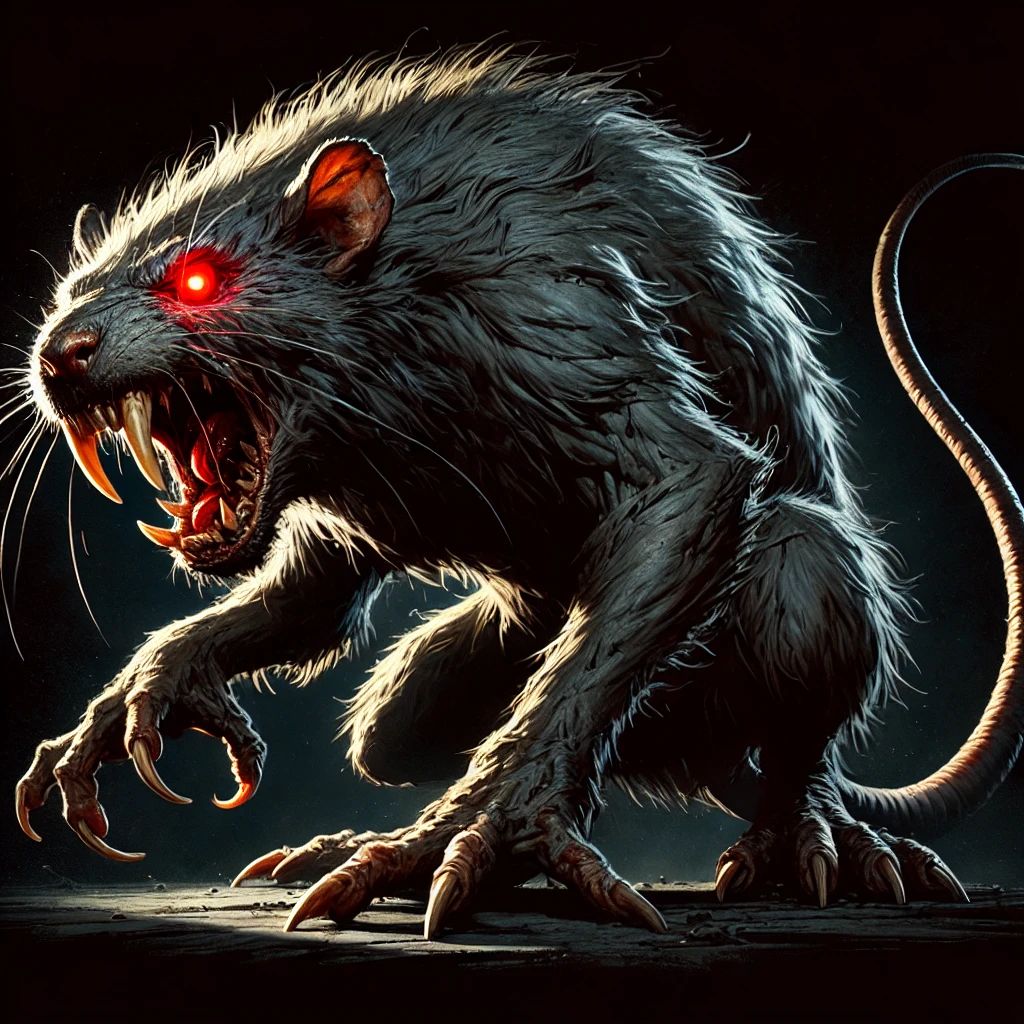
By order of the Council of Temples and the City Sanitation Office, all available adventuring parties are invited to undertake the extermination of rodents of unusual size currently infesting the sewerworks beneath Divinity’s Rise. Said vermin have emerged nightly from street grates, resulting in several citizen deaths, multiple maimings, and the spread of fever of suspected rodent-borne origin. The infestation threatens not only the health of the citizenry but also the sanctity of holy processionals and temple observances.
Payment:
- Five gold per tail, presented as proof of extermination.
(Pfinder, aside: “A tail so priced must be a tail well-curated.” Wolfgang, aside: “And well-seasoned.”)
Conditions:
- Adventuring parties assume full liability for injuries, disease, moral injury, and other suboptimal outcomes sustained during this undertaking.
- The Sanitation Oversight Subcommittee specifically disclaims responsibility for divine wrath incurred during sewer exploration, including but not limited to curses, hexes, and offended saints.
Signature:
Horatio Quill
Assistant Deputy Clerk
Manchester Sanitation Oversight Subcommittee
(At the bottom, a large rubber stamp in smudged ink reads: “Adventurer’s Guild Approved — May the odds ever be in your favor.” Another, smaller stamp reads, “Please do not return tails still attached to rats.”)
Beneath the official text, a charcoal scrawl added:
“Tails my ass. These things stand taller than a halfling. Bring a big blade and more soap than you think you’ll need.”
Ant read this, looked at her boots, and sighed the sigh of someone who had already lost an argument with gravity.
Undeterred, the party claimed the contract and marched to the Guild’s GOOGLE archive—that grand repository of useful truths, useless footnotes, and opinions typeset like facts.
GOOGLE Entry: Rattus Giganticus
(“Giant Rat,” “City Toad,” “That Thing Behind the Crate,” regional)
Earliest Record:
The earliest written reference to Rattus Giganticus dates to the Siege of Varkesh approximately 1,250 years ago. Chroniclers describe “rats large as hounds” pouring through undermined walls and carrying away the bodies of the fallen. Whether these creatures were deliberately unleashed by the besieging army or were opportunistic infestations remains unclear.
Origins:
The origins of the species are obscure. The most prevalent theories include:
- Arcane Experimentation: Attempts at improved familiars, pest-control that controlled back, or “living scouts” with regrettable performance reviews.
- Siege Alchemy: Rats altered as weapons of war, engineered to thrive in tunnels and ruins.
- Natural Mutation: A less popular theory suggests they are merely the natural apex of generations of common rats adapting to the conditions of cities and sewers.
Habitat and Distribution:
Giant rats are exceptionally well-adapted to subterranean environments beneath inhabited areas. Today they are found in every city across the continents, especially where sanitation is poor and civic pride aspirational.
Hazards.
- Disease: Bites and scratches frequently transmit fever, wasting sickness, and other vermin-borne maladies. Estimates of infection range from 10% to 50% of encounters. This variability likely reflects rat-strain differences, reporting quality, and the human tendency to call all illness “a chill.”
- Predation: Giant rats have been documented dragging off livestock, pets, and the infirm. If this preferred prey is unavailable, they will hunt healthy adults and carry them away, either piecemeal or whole.
- Persistence: Their high birth rates ensure rapid recovery of numbers even after apparently successful mass exterminations.
Control Measures.
- Traps and Poisons: Of limited utility; giant rats exhibit wariness toward baits and poisons encourage “survival of the clever”.
- Magic: Temporarily thins numbers; typically teaches survivors to duck.
- Blockades: Sealing entrances and burrows may succeed but locating every ingress in a sewer system is notoriously difficult. See comments about “city” above.
- Direct Extermination: The cornerstone of all control remains direct killing, often contracted to adventurers. Fire is especially effective, as the creatures fear flame and shun bright light.
Notes.
Adventurers report that giant rats are prone to panic in torchlight and can, on occasion, be set ablaze — a method both practical and, some would argue, therapeutic.
Unfortunately, the entry for Dolven’s Hollow, the party’s other interest of the moment, was much less revealing,
GOOGLE Entry: Dolven’s Hollow
A hamlet of some 500 souls located about a day’s walk northwest from Manchester, the capital of Cambria, Dolven’s Hollow serves as the administrative and cultural center of the farms that surround it. Stable and unremarkable.
Lavleen noted, “In Archea, ‘stable and unremarkable’ usually means ‘we stopped looking there long ago.’”
That evening, as the Hero’s Respite filled with the warm noise of clattering mugs and half-sung songs, the party found themselves in easy conversation with a grizzled adventurer at the bar. He introduced himself as Veynar, a man with the air of someone who’d seen his share of trouble and lived to tell about it.
He listened with sharp attention as the party recounted their survival of the goblin ambush on the road. His eyes narrowed, and when they finished, he leaned back with a thoughtful frown.
“Bands of hobgoblins, sure — they’ll range this far when they’re desperate or bold. But goblins? Out here? That’s not their ground. And working together with hobgoblins? That’s even stranger. Goblins don’t take well to discipline, and hobgoblins don’t usually have the patience for their kind. And as for a big, organized ambush like that… well, you just don’t see it. Not unless something’s pushing them.”
He shook his head slowly, almost impressed.
“No one’s had a scrap of evidence about those missing caravans. Then you lot walk into an ambush, live to tell the tale, and bring back a story that smells of something worse than random raiding. You might’ve just stumbled on the first real clue.”
Veynar took a long drink, then turned the talk to lighter matters.
“So what’s next for you lot?”
When the party mentioned the rat hunt in Divinity’s Rise, Veynar barked out a laugh that startled a barmaid nearby.
“Ha! Every party does their time in the sewers. I still remember my first rat job — thought we were slayers of dragons, down there in the muck. It’s practically a rite of passage.”
Ant said, “We’re getting paid five gold a tail” and Veynar whistled, “That’s good money for tails. Ask them why the price is so high. City only pays like that when someone’s desperate.”
“Any advice on how we should approach the rats? I mean, the ones in the sewers?” asked Hunkle.
Veynar smiled then frowned, recalling events long since passed, “Don’t think of them as just big rats. They’re worse: cleverer, meaner, more spiteful than their little cousins. It’s not just the size, or the teeth, or the disease — though you’ll want to watch for that, too. It’s the way they fight. They’re cunning. Aggressive. Evil, even.”
He tapped the bar with a scarred finger for emphasis.
“And here’s the trick of it: they’re afraid of fire. Your torches keep them back, but that makes it harder to finish the job. They’ll scuttle into the shadows, scatter, regroup. You’ll need to corner them, pin them down where they can’t escape. Every so often you’ll get a bold one that lunges straight through the flame — that’s the nasty surprise. But most of the time, it’s a chase. Hunt them like you’d hunt something clever, not just vermin.”
With that, Veynar raised his mug to the party, a glint of respect in his eye.
“Good luck down there. Survive the sewers, and maybe you’ll survive Cambria.”
The following morning, Ant pushed her breakfast around the plate with distracted irritation. Finally, she sighed. “I checked the mirror again last night.”
Wolfgang looked up, interested. “And?”
“Nothing,” Ant muttered. “Just me and a flickering candle. Though…” She hesitated. “There was a second where I thought I saw—someone. A shadow where there shouldn’t have been. But it was gone in a blink. Just the candle, I suppose.”
Pfinder clapped a hand to his chest in mock sorrow. “Shocking! To be courted by a patron who cannot even keep an appointment. Why, Antoinette, your mysterious benefactor is the worst suitor I’ve ever heard of. No poetry, no flowers, and not so much as a single midnight serenade beneath your balcony.”
Wolfgang wagged his fork like a gavel. “Terrible boyfriend material. Never calls, never writes, never tells you where he’s been. Poor communication skills, no sense of timing, and I’ll wager he doesn’t even know when your birthday is.”
“Probably forgets anniversaries too,” added Vren, with a wicked grin.
Shamus smirked into his porridge. “And when he does show up, it’s all shadows and riddles. Classic. Can’t even tell you what he wants, just: ‘Wait until morning, Antoinette.’ Sounds less like a patron and more like a bad bard with commitment issues.”
Cassyndra tapped her quill against her notebook, pretending to take minutes. “Proposal: we demote him from ‘Patron’ to ‘Acquaintance Who Sometimes Texts at Inconvenient Hours.’”
Even Lavleen muttered, “At least goblins send raiding parties. That’s effort.”
Ant gave them all a flat stare over the rim of her mug. “Hilarious. Truly. I’ll be sure to tell my mirror that my esteemed companions are deeply invested in my romantic well-being.”
Pfinder leaned forward, eyes gleaming. “Please do. Perhaps it will guilt him into sending flowers. Or at least an explanatory note.”
Ant rolled her eyes, though the corner of her mouth betrayed a reluctant curve. “You’re all impossible.”
“True,” Wolfgang said, sprinkling spice over his eggs with priestly solemnity. “But at least we show up for breakfast. Which is more than your patron can say.”
The laughter that followed warmed the table, but in the back of Ant’s mind lingered the memory of that flicker — that instant where the shadow in the mirror had seemed just a little too tall, a little too deliberate.
That afternoon, the party was ushered into a cramped office where they found Horatio Quill, Assistant Deputy Clerk of the Manchester Sanitation Oversight Subcommittee. He had ink on the cuffs, hair arguing with itself, and the harried calm of a man who files panic under “Miscellaneous” and then gets on with the business at hand.
“Ah. Mercenaries,” he said, using the taxonomy rather than the compliment. “Good. Let’s begin.”
He pushed aside a thick sheaf of papers and gestured vaguely toward the chairs, which appeared to be losing an argument with gravity.
“Manchester, as you’ve no doubt heard, is built atop the ruins of the capital of the ancient orc empire, Goghnol Mogh. The geographical advantages that made it valuable to the orcs—sea and river access, defensible terrain, central trade routes—make it equally valuable to us. While the orc city above was razed during the Righteous War, much of their below remained. Their sewers, in particular, were… durable. Our current system is still tied into them. Which means, unfortunately, you’re not just dealing with rats. You’re dealing with whatever the orcs left behind.”
He rifled through a ledger, tapping one page.
“You see, in Manchester’s sewers, there are… curiosities. Creatures that don’t belong in sewers at all. Magical remnants, biological oddities—no one quite agrees why, but the leading theory is that the orcs designed their sewers for more than waste management. The creatures rarely trouble us. They stay in their tunnels, we stay in ours, and the city continues above them. Except when repairs or exterminations are required. Then we hire people like you.”
A thin smile. The only one he allowed himself.
He slid a folded map across the desk.
“This will serve you well enough. The orcish system was built on repeating motifs, so much of it is predictable. Still, expect collapses, dead ends, and the occasional tunnel that looks nothing like what’s on this parchment. Sewers grow eccentric after five hundred years.”
He tapped his quill against the map, tracing the channels.
“The main conduits are two to three feet deep and sluggish. Difficult terrain for most. More than difficult for the short.” His eyes flicked to Ant and Wolfgang. “Apologies. Occupational hazard, no doubt.”
“None taken,” said Wolfgang mildly. “I’ll bring stilts.”
Ant muttered, “Or a snorkel.”
Quill went on, unbothered. “Some stretches are deceptively deep, and the current in certain areas is stronger than it looks—swift enough to take a man off his feet. Remember: this is a combined sewer system. Rainfall and waste alike. Fortunately, we’ve had no heavy rain in the past fortnight.”
He steepled ink-stained fingers. “Now, as to your obvious question: yes, the pay is higher than standard.”
Pfinder leaned forward. “Ah, splendid! So the rumors of bureaucratic generosity were true?”
Quill gave him a flat look. “No. The rumors of desperation were.”
Shamus frowned. “What makes this infestation so special?”
Quill sighed through his nose. “The current outbreak is… anomalous. The rats are larger, meaner, and more coordinated than usual. Not just scavenging—but seemingly organizing raids to the surface.”
He flipped a page in his ledger. “Two nights ago, a priest of Pelor was dragged from the steps of Divinity’s Rise. Last week, the sewer foreman disappeared entirely. And three days before that, we lost a contracted extermination team—five professionals. Didn’t even get their first tail turned in.”
Cassyndra scribbled notes. “So this isn’t a routine purge.”
“No,” said Quill. “It’s an embarrassment. And embarrassing problems in sacred districts tend to become expensive ones.”
Wolfgang frowned thoughtfully. “How expensive are we talking?”
“The Council of Temples has been… emphatic that worshipers shouldn’t have to wade through puddles of rodent refuse or be devoured en route to evening prayer,” Quill replied dryly. “And when enough clerics write enough angry letters, someone in Sanitation authorizes danger pay.”
Pfinder raised a hand delicately. “To summarize: the rats are fiercer, the previous help is now part of the ecosystem, and the clergy are uncomfortable?”
“Correct.”
“Splendid,” said Pfinder. “We do our best work under impossible circumstances and light moral pressure.”
Quill ignored him. “Expect more than giant rats. You’ll see swarms of the smaller sort, spiders, snakes—poisonous and otherwise—oozes of all temperaments, and, on rare occasion, a disfigured zombie or skeleton. And yes, there are gelatinous cubes down there. They keep the tunnels clear. Try to leave them alone; they’re part of the sanitation system now. But if one corners you—kill it quickly.”
Wolfgang raised an eyebrow. “And the rumors about baby alligators flushed into the sewers where they grow to giant size?”
“Utter nonsense,” Quill said. “Baseless myth.”
Ant murmured, “He didn’t say anything about giant goldfish.”
Quill blinked. “…Baseless myth,” he repeated, less certain.
Lavleen, who had been silent until now, asked, “How many have gone missing down there, total?”
Quill consulted a side ledger, frowned, and shut it again. “Officially? Seven. Unofficially? Eleven. The difference, as ever, is paperwork.”
Cassyndra closed her notebook. “That explains the hazard pay.”
“In short,” Quill said, gathering the pages back into an unsteady stack, “expect giant rats, filth, and surprises. Kill what you can, bring back the tails, and for the love of the gods, don’t get swept into the deeper channels. Any further questions?”
Shamus stood, rolling his shoulders. “Just one. If we don’t come back—who writes our report?”
Quill looked up, deadpan. “Me. Briefly.”